One of the most fascinating things about kimono textiles is that their designs are rarely just decoration.
Many traditional patterns carry symbolic meanings connected to nature, seasons, and wishes for good fortune. For centuries, these motifs reflected the values and aesthetics of Japanese culture.
When working with vintage kimono fabric today, these patterns still carry those stories.
Nature as Inspiration
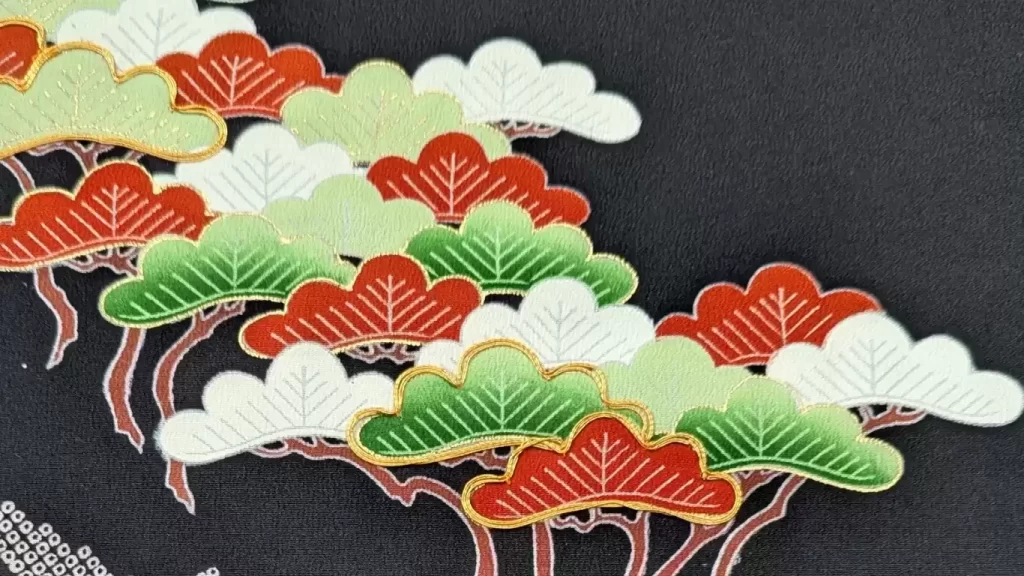
Nature plays a central role in Japanese design. Many kimono motifs are inspired by plants, animals, and natural landscapes.
These patterns were often chosen to reflect the seasons or express certain wishes for the wearer.
For example:
- Cherry blossoms (sakura) symbolize the beauty and fleeting nature of life.
- Pine trees (matsu) represent longevity and resilience.
- Plum blossoms (ume) symbolize perseverance and hope during difficult times.
Because seasons are important in Japanese culture, certain motifs traditionally appeared at specific times of year.
Symbols of Good Fortune
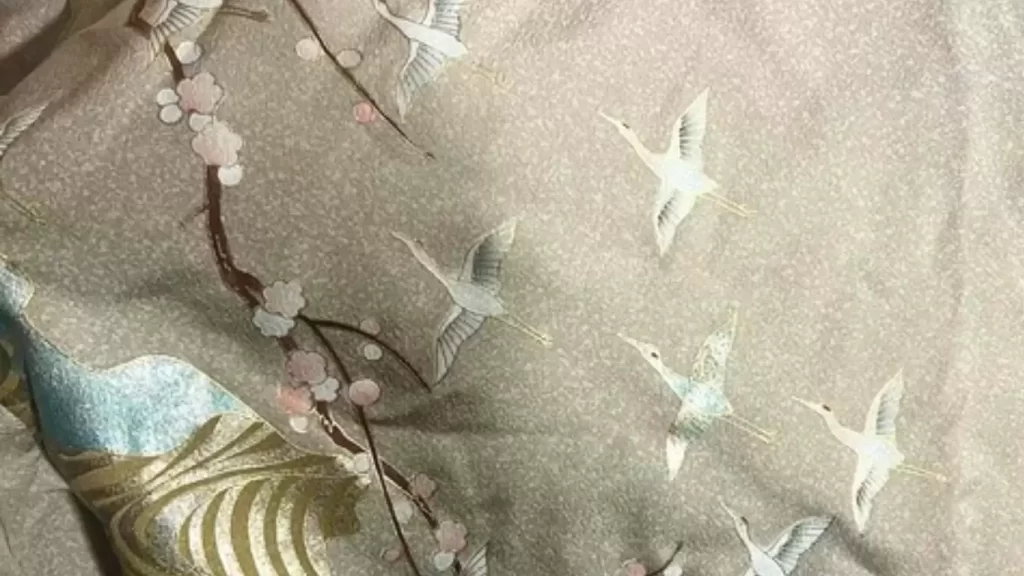
Some kimono patterns were believed to bring good luck or positive wishes. These designs were often worn during celebrations or special occasions.
Common examples include:
- Cranes – symbols of long life and happiness
- Turtles – associated with longevity
- Fans – representing prosperity and growth
- Treasure motifs – symbols of abundance and good fortune
- Lucky mallet (Uchide no Kozuchi) – a magical mallet from Japanese folklore said to grant wishes and bring wealth or good fortune
The lucky mallet appears in traditional “treasure motifs” (takaramono) patterns, often together with other auspicious objects.
Waves and Flowing Patterns
Wave patterns appear frequently in Japanese textiles and art.
One famous design is the seigaiha pattern, made of repeating arcs that resemble ocean waves.
This motif represents:
- calm strength
- resilience
- the continuous flow of life
Because waves continue endlessly, the pattern is often interpreted as a symbol of enduring peace and stability.
Wave patterns appear frequently in Japanese textiles and art.
One famous design is the seigaiha pattern, made of repeating arcs that resemble ocean waves.
This motif represents:
- calm strength
- resilience
- the continuous flow of life
Because waves continue endlessly, the pattern is often interpreted as a symbol of enduring peace and stability.
Stories Hidden in Fabric
When looking closely at vintage kimono fabrics, you can often see many motifs combined into a single design.
Flowers, birds, clouds, and geometric patterns may all appear together.
Each element contributes to a visual story, making the textile feel rich and layered.
Even today, these designs still carry the artistic traditions of the past.
Continuing These Stories
Repurposing kimono fabric allows these patterns to continue being appreciated rather than forgotten.
Instead of remaining hidden in storage, the designs can become part of everyday life again.
A bag, pouch, or accessory made from kimono fabric still carries the beauty and symbolism woven into the original textile.
In this way, each handmade piece becomes a continuation of that story.